
Three million tonnes of buffer stock, where the government bears the interest and insurance cost, was announced by the Centre only for a year and that period is ending in June.

'Several businesses like entertainment, hospitality, travel etc would never be the same again.'

ICICI Bank reported good results for the October-December 2023 quarter (Q3), with 24 per cent year-on-year (Y-o-Y) growth in profit after tax (PAT). Net interest margin (NIM) dropped 10 bps quarter-on-quarter (Q-o-Q) to 4.43 per cent. Credit growth was at 19 per cent Y-o-Y (4 per cent Q-o-Q), while deposit growth was at 19 per cent Y-o-Y (3 per cent Q-o-Q).

The government had 57.84 million tonnes of wheat and rice in its godowns at the beginning of this month, which is 81 per cent more than the buffer norm.

State-run Indian Oil Corporation (IOCL) reported a weak performance in the fourth quarter of FY24 (January-March 2024), and the turmoil in the energy market indicates it could endure another lacklustre quarter. The oil marketing company (OMC) reported an Ebitda of Rs 10,400 crore, down 27 per cent year-on-year (Y-o-Y) due to weak reported gross refining margin (GRM) of $8.4 per barrel in Q4FY24, which was almost half the consensus expectation of $15 per barrel.

If you already hold significant amounts of equity in your portfolio, avoid MAAFs with over 60 per cent equity. But if you lack equity exposure, an aggressive MAAF may be appropriate.

After depreciating 0.32 per cent against the dollar in October so far, the rupee is expected to hold ground against the greenback in the current quarter on the back of robust inflows. According to the median of a Business Standard poll of 10 respondents, the rupee is seen trading around 84 per dollar till the end of December. "In India's case, at least the bond and cash related inflows will continue.
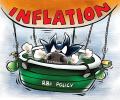
The Consumer Price Index (CPI)-based inflation is now projected to be at 5.3 per cent for 2021-22 with risks evenly balanced. In its August policy, the central bank had estimated inflation to be at 5.7 per cent due to supply side constraints, high crude oil and raw materials cost.

Retail prices of three pulses -- tur, moong dal and urad -- are on a declining trend after the government took coordinated actions with state governments to check hoarding, the Food and Consumer Affairs Ministry said on Friday. "The upward pressure on retail prices of tur, moong dal and urad has stabilized in 2021 and is on a stable or declining trend," it said in a statement. According to the ministry, the average increase in prices of these three pulses during April to June 16, 2021 was 0.95 per cent as compared with previous three months (January-March, 2021).

The wheat procurement season has ended in most big foodgrain-growing states with an all-time high purchase of almost 28 million tonnes (mt), creating a problem of storing such huge stocks.
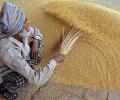
India's opening stocks of wheat in the central pool are expected to be 19.5-20 million tonnes as on April 1, 2022, the lowest in the last three years, but much higher than the normative level required for maintaining a buffer and strategic reserve, trade and market sources said. In accordance with the buffer and strategic reserve norms, India should have a wheat stock of 7.5 million tonnes in the central pool as on April 1 each year and this year's stocks, though the lowest in the last three years, will still be over 160 per cent more than what is required. On the export front, both government and trade sources are unanimous that this year (FY22) they will be 7-7.25 million tonnes, a record, while in the next financial year, they might touch even 10 million tonnes if the current momentum is maintained.

The government on Wednesday raised the minimum support price (MSP) for paddy by 5.35 per cent to Rs 2,300 per quintal for the 2024-25 kharif marketing season. The hike in paddy support price comes despite the government sitting on surplus rice stocks, but it is significant ahead of elections in states like Haryana, Maharashtra, Jharkhand, and Delhi.

In an effort to rein in inflation, the State Trading Corporation is likely to float a tender to import up to 2 million tonnes of wheat this month.

Omicron has started replacing Delta variant in the country in terms of the number of COVID-19 cases and positive international travellers are almost 80 per cent Omicron now, official sources said on Friday.

The country had imported 5.5 million tonnes of pulses last year.
A head of its meeting, the Reserve Bank of India (RBI) can take some solace from the softening food commodity prices. However, the events surrounding the last few weeks show that the fall may not be uniform across all commodities, and cereals like wheat and rice could be the outliers. A Reuters report said that local wheat prices jumped to a record Rs 23,547 per tonne on Wednesday. That is a 12 per cent rise from the recent lows that followed the government's surprise ban on exports on May 14.

10 stocks which are most popular with brokerages right now and are expected to deliver maximum upside over the next 12 months.

Maruti Suzuki India on Monday said it is assessing the possible impact of the devastating earthquake and tsunami in Japan on its components import from there, while cancelling celebrations to mark one crore production milestone in India.

Bharatiya Janata Party (BJP) president Nitin Gadkari on Tuesday demanded that the Congress-led United Progressive Alliance (UPA) government publish a 'White Paper' on rising prices of essential commodities that crippled lives of the middle class and the poor in the country.

Faced with the dichotomy of overflowing granaries and rising commodity prices, Prime Minister Manmohan Singh on Tuesday said the government will do 'everything possible' to put the lid on food inflation.
The government said on Monday that it would continue to allow exports of rice, wheat and wheat products without quantitative restrictions as long as there were enough stocks for domestic consumption.\n\n

Markets regulator Sebi joined hands by banning any fresh futures market position in chana, the only commodity among pulses where such trading was allowed

Attacking the United Progressive Alliance (UPA) government for its "utter failure" to check rising prices, the CPI(M) on Friday said the Centre's "faulty approach" in blaming states, without taking effective steps to tackle the real issues, would not solve the problem.

'Investors looking at the next 6-12 months can be certain that the Fed will maintain its easing cycle, and we expect the overall environment to be conducive for fixed income investments for portfolio diversification.'

Indian growth in the rest of this fiscal year and next will be propelled by robust domestic consumption as consumer confidence improves, and by investment, including large increases in government capital expenditure, according to the Asian Development Outlook September 2023. "As slowing exports could foment headwinds for the economy, and erratic rainfall patterns are likely to undermine agricultural output, the growth forecast for FY2023 is revised down marginally to 6.3 per cent," ADB said.

Union Agriculture Minister Sharad Pawar on Wednesday said that the price of milk would increase, as there is a scarcity of milk in north India.

'The long-term impact of elections is minimal.'

An estimated 1.5 lakh people are being shifted from low-lying coastal areas in Gujarat while 54 teams of the NDRF and SDRF remained deployed on Sunday in view of the India Meteorological Department's (IMD) warning that the very severe cyclonic storm Tauktae will reach the state coast on Monday evening and cross it on early Tuesday morning.
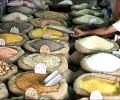
The Centre has taken several measures such as creating a buffer stock of 40,000 tonnes and sale of imported pulses at cheaper rates to give relief to the common man.
The government has decided to scrap a plan to purchase wheat through a series of small domestic tenders in different parts of the country, fearing that private traders may corner most orders.
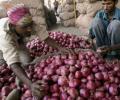
The crop is currently trading at Rs 22 a kg compared to Rs 12.50 one month ago.

Axis Bank's results for the fourth quarter of the 2022-23 financial year (Q4FY23) were skewed due to large one-off charges related to its acquisition of Citi's retail business. Axis reported a loss of Rs 5,730 crore on account of exceptional items of Rs 12,350 crore (net of tax) towards Citi's acquisition, policy harmonisation etc. Excluding this one-off, the adjusted net profit or profit after tax (PAT) would be Rs 6,630 crore, up 61 per cent year-on-year (YoY).

The fund allocated for pulses buffer is more than 40% of entire farm ministry's 2016-17 budget.
The downfall in sugar prices is continuing with the rates bound to slide at least Rs 50 a quintal by the month-end.

Now, government is also contracting imports.

'With the deployment of a higher degree of mechanisation, awarding contractual mining to MDOs and operational efficiency, we feel confident of achieving the desired target.'

The Nifty IT index, data shows, has outperformed the markets in each of the last four election years post the result. announcement.
India's food stocks declined by a massive 39 per cent to 200 lakh tonnes last month against 328 lakh tonnes in the corresponding period last year.
